New Years trip to Washington – Part 3

I wake up starving and head down to breakfast provided by the Quality Inn in their small dining area. Starting off with cereal, I consume that and there is still a large hole in my belly so back to the buffet line I go for a second helping of something more substantial. AH HA, I spot bacon, sausage, a waffle maker, biscuit, muffins, bagels, English muffins, white gravy, donuts and more. I decide biscuits with gravy, a couple of sausages, a bagel and some orange juice will fill the hole very nicely. Finishing all this my stomach is finally quite happy.

Back to the room to clean up, pack and get on the road for the day, it is still dark outside at 7AM as I pull out of the parking lot.

Heading south for 14 miles (22.5 k) I follow a small dead-end road to Cape Arago State Park looking for the Cape Arago Lighthouse. I reach a turn around at the end of the road and get out to investigate this picnic/hiking area still searching for the lighthouse. The sun is just coming up and it is cold and windy, I almost loose my hat in the gusts of wind. This would be a lovely place to visit in good weather. Continuing back along the same route I notice a sign for a botanical garden that would make another interesting stop but still being too early it is closed. Further on I spot the lighthouse. Wondering how I get to it I find a road that is signed “Lighthouse Road, NO ACCESS TO LIGHTHOUSE”. Disappointed I am glad I stopped to get the photos I did from Sunset Bay pullout when I saw it in the distance.


The first lighthouse was built and illuminated in 1866 due to the amount of shipping that was coming and going in Coos Bay. This tower was only 25-foot (7.6 m) high with an open base. Connected to the keeper’s residence via a 1,300-foot (400 m) wooden walkway this tower was soon in need of repair due to its western exposure on the small island. In 1890 a second wooden tower, located higher on the island, stood 100 feet (30 m) tall providing better illumination. Erosion threatened this light and in 1934, the third light was built made from concrete to better withstand the inclement weather of the area. Decommissioned on January 1, 2006 the third light remains, all other accessory buildings have been demolished.


Continuing back to Highway 101 I head north for my next stop at Umpqua Lighthouse, 34 miles (54.7 k) north. A Coast Guard survey during the summer of 1849 determined the best locations for lighthouses along the coast. The mouth of the Umpqua River was selected as one of only six sites in the Oregon Territory, which included the modern day states of Oregon and Washington. In the fall of 1856, the officer in charge of lighthouses approved the erection of the lighthouse at Umpqua. In Oregon Territory, local tribes used the Umpqua River as prime hunting and fishing grounds and did not want the lighthouse built. But rather than attacking the Lighthouse the local tribes sabotaged the construction by stealing critical tools and supplies. Lit in October 1857 this was the first light along the Oregon Coast. The structure of the original lighthouse was compromised due to a sandy soil and river flooding not considered by the builders. The light was being removed in 1861 when the workers ran for their lives and watched the tower come crashing down just after they removed it’s light.


The lighthouse was replaced with a buoy and a decision that a new light at Cape Arago, twenty-five miles to the south would better serve seafarers. Eventually in 1888 it was petitioned that a new lighthouse be built at Umpqua so that a ship at sea would pass from one light to the next with out loosing sight of a light on land. Building the lighthouse further inland on a headland above the mouth of the river this is the farthest distance from a river or ocean of all the lighthouses along the Oregon Coast.

The new lighthouse keepers were housed in a duplex home, for the two assistants, a barn, cisterns, and two oil houses that were completed on January 1893. All that remained to be done now was to install the lens in the tower and the light was finally established on December 31, 1894. This new lighthouse stood 165 feet (50.3 m) above sea level and was constructed of brick with a plaster overlay. Decommissioned April 28, 2009 it was  “no longer a critical component for safe navigation”.

3 to WA-6

Highway 101 in Oregon

I head north 40 miles (64.4 k) on Highway 101 to Heceta Head Lighthouse in Devils Elbow State Park.

Just a few headlands over from the Sea Lion Caves lies one of the most photographed lighthouses in Oregon, the Heceta Head Lighthouse. Surrounded by a state campground and park, the lighthouse can be seen from Highway 101, or visited if you are willing to take a short uphill hike.


Parking at the Heceta Head Lighthouse State Park there is a lot for day-trippers to experience the surrounding area. The Scenic Viewpoint on 101 is a great way to see a number of different attractions although parking below the historic Cape Creek Bridge will let you walk out onto the beach, bird watch the birds on the large rocks in the small bay, hikes or visit the lighthouse and caretakers cottage.

3 to WA-12

Walk to Heceta Head Lighthouse

Perched 150 feet (45.7 m) above the sea the Lighthouse is one of the most-visited lighthouses in the United States, with thousands of visitors each year enjoying its history, romantic aura, and a beautiful setting.


In 1888 the Lighthouse Board recommended that a first-order lighthouses be constructed here at Heceta Head and at Umpqua River. Looking at the forested site today it is hard to imagine that there was very little vegetation when the lighthouse was constructed. A forest fire swept through the area a few years earlier, wiping everything out. Construction began in 1892 with the contractors completing the dwellings, barn, and oil houses in January 1893. The 56 foot (17 m) tall masonry tower stands fifty-six feet tall has it’s light 205 feet (62.5 m) above sea level. This is the most powerful light on the Oregon coast and can be seen 21 miles (33.7 k) out to sea. With three keepers and their families at Heceta Head, a small, one-room schoolhouse was built at the station to educate the children.


Life became a little more modern and less isolated in the 1930s as the Oregon Coast Highway was being built. In 1934 a power plant/garage was built to electrify the station eliminating the oil vapor lamp. Meanwhile the keeper’s dwellings received lights and an electric washing machine.

Early years Heceta Head Lighthouse

Early years Heceta Head Lighthouse

The station was originally equipped with a separate dwelling for the head keeper and a duplex for the two assistants. The addition of electricity reduced the keeper’s workload and in the end 1930s the position of second assistant keeper was eliminated. Thus the remaining two keepers occupied the duplex, and the single dwelling was removed in 1940.

75 Coastguardsmen were stationed at Heceta Head during World War II as part of a coastal patrol. The commanders lived in half of the duplex, while the enlisted men were housed in barracks erected on the site of the former keeper’s dwelling, they patrolled the coast with roughly 12 dogs 24 hours a day.

After atomization in 1963, the remaining duplex cottage was leased to Lane Community College for extra class space and since 1995 the cottage has served as a Bed and Breakfast. Heceta Head Light and Keepers Quarters were placed on the National Register of Historic Places in 1978.

It was 1:30 PM as I left the lighthouse and still needed to drive 191 miles (307.4 k) to my son’s house in Vancouver, WA. This dive took a little more time due to the Friday evening New Years Weekend traffic in the Portland Metro Area. Arriving at 5:30 PM we all went out for pizza and I fell into bed by 9:30 PM, tired after a very long tiring day.

New Years trip to Washington – Part 2

Up at 7AM in the dark, I showered, packed and departed to visit some painted ladies of the town. No not that kind, but the beautiful Victorian Houses located throughout the city of Eureka. My Air BnB host told me of Hillsdale Street and Carson Mansion as places to see fine examples of this Victorian, Queen Anne style of architecture.

These wonderful homes are located throughout the city in various stages of maintenance that go from restored to dilapidated conditions, along Hillsdale Street they are well maintained and are a great display of this style of architecture. Visiting Hillsdale Street lined with these homes brought back such a noustalgic past life that would have transported me back in time if it weren’t for all the modern cars parked out front.


Next stop was to have a breakfast consisting of 2 blueberry pancakes, 2 eggs, 2 pieces of bacon, hash browns and a large glass of orange juice to fuel my day of sightseeing along the California and Oregon Coast, yes I was hungry and finished it all. I planned to visit several scenic overlooks and lighthouses along the way to my next stop just north of Coos Bay, OR only 218 miles (350.8k) and 4 ½ hours of drive time north.

My first stop was still in Eureka, just down the street from breakfast, the Carson Mansion. Placed on the Historic American Building Survey in 1964 it is one of the most photographed Victorian homes in California. Completed in 1884 it has been a private club since the 1950’s.


My next stops, lighthouses in Trinidad, CA and Crescent City, CA were also recommended by Patricia, my B&B host.

Prior to satellite and electronic navigation sailors relied on dead reckoning, compass and visual sittings to sail the waters of the oceans, during the darkness of night they relied on the stars and visual sightings. Many ships were lost due to running aground due to heavy weather along dangerous coastlines.

Fires built on hilltops once defined port access and placing that fire on a tall platform increased its visibility out to sea. Later lighthouses were located along coastlines to help define the coastal shoreline and locate dangerous areas that could sink a ship. In heavy fog, that is quite common along coastlines, so a light and foghorns (bells in olden times) warned mariners of hazards.


Trinidad Lighthouse is only 20 miles from Eureka located on Trinidad Head a small section of land jutting south out from the coast defining the harbor entrance. Built in 1871 the small 20-foot (6.1m) tall tower sits on a promontory 176 feet (53.6m) above the sea. Originally consisting of the light tower, a single residence, and small barn; a fog bell house was constructed in 1898 with a 4,000-pound (1,800 kg) bell that was operated by weights. The Trinidad Civic Club erected a facsimile of the tower in 1949 at a park overlooking the harbor and installed the original lighthouse lens in its structure and the 4,000-pound bell displayed alongside the tower. This Memorial is now under protest by local Native Americans stating it has been built on an ancient burial ground.


62 miles (99.7k) north of Trinidad is the Lighthouse in Crescent City on Battery Point. This lighthouse built in 1855 is on a tiny point of land that is only accessible during low tide. Built in a Cape Cod style of architecture this lighthouse survived the March 27, 1964 Alaska earthquake tsunami that hit the city and killed 11 people.


Heading into Oregon I stop 35 miles (56.3k) north at Whaleshead Beach to walk along the sand and enjoy the coastal scene.

2 to Coos Bay-18

Whalesehead Beach, OR

Another 58 miles (93.2k) later I stopped at Cape Blanco Lighthouse at 3 PM. A lighthouse sitting on 200-foot (61m) high cliffs jutting 1-½ miles (2.4k) out into the Pacific Ocean, this forested head of land had to be cleared of the spruce forest so the light could be visible from sea. Getting out of the car was a struggle; the wind was blowing so hard I could barely stand up. Walking the ¾ mile or so path to the lighthouse along a ridge-line didn’t interest me today so I leaned against a pole just to get a steady photo of the lighthouse. I’ll return on a future trip to visit this one.


On the way in off Highway 101 I noticed a sign leading to the Hugh’s Historic House (Hughes Ranch) that is listed on the National Register of Historic Places, I decided to go in and see it, as I didn’t make the journey to the lighthouse. Situated behind a hill it was in the calm leeward side away form the strong ocean winds. Built in 1898 for the dairy farm of Patrick and Jane Hughes this Victorian style two-story house was home to Mother, Father and 7 children. Local church groups decorated every room for the Christmas Holidays. The well appointed home with authentic furnishings was a joy to walk around and listen to the curators tell of life of the inhabitants.


Finishing the day’s 218-mile (350.8k) trek in North Bend, OR I stop for the night at a Quality Inn Hotel at 5 PM to rest for my final push to Vancouver, WA the next day. A nice clean quiet typical motel room awaited me that evening for another great nights rest.

New Years trip to Washington – Part 1

Getting up before dawn I left home in Orange County to head for my first nights stay in Eureka, CA. 682 miles and 11 driving hours from home. It was going to be a long day that took me up Interstate 5 to Interstate 580 through the east San Francisco Bay Area, up to Richmond and across the Richmond-San Rafael Bridge to link to Highway 101. This bridge is the northernmost east-west crossing of the bay. Opened in 1956 the tolls are only collected heading west.


Connecting to Highway 101 I continue up this iconic road through the California Redwoods and my destination for the day Eureka, CA and a cozy room for the night.

1 to Eureka-5

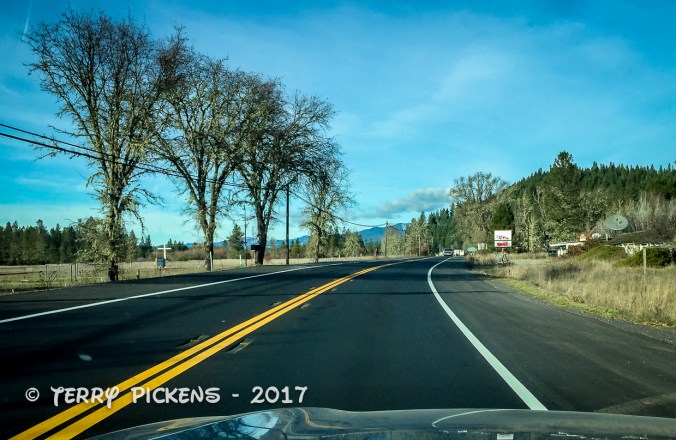
Highway 101

I used Air BnB to locate this very comfy, quiet room with a separate entry and bath in a residential neighborhood in the south east of the city. Colorful Corner was all that it was advertised and the host Patricia was a marvelous person to meet. We talk via email before my arrival, she gave me suggestions for places to have dinner and to visit on my way north the next day. Along the way Patricia texted me that she might not be home when I arrived and gave me the access code to the room, Although when I did arrive, after 12 ½ hours of travel time, she was home and we had a delightful talk as I dropped my things in the room and headed out to dinner.


A port city on Humboldt Bay in Northern California, Eureka’s Old Town district and throughout the city features beautiful Victorian homes in all states of repair. The bay was overlooked by early European Explorers and not settled until 1849 when it was discovered by an overland expedition. The second largest bay in California was the jumping off point and base for the early gold miners of Northern California who did not want to take the long overland trip from Sacramento. Eureka got its name from the eager gold miners of the day, its Greek meaning “I have found it” is also the state motto of California. Timber, shipping, fishing, boating and a strong commercial district has shaped the largest coastal city between San Francisco, CA and Portland OR throughout it’s history and to this day.

The cool Mediterranean climate has an average high August temperature of 64.3 °F (17.9 °C) and an average December temperature of 47.8 °F (8.8 °C) With an average of 40.3 inches (1,024 millimeters) of rain per year falling on an average 119 days during the year. The city might also be covered in a blanket of fog for most of the year.

Climbing into bed, exhausted, I appreciated the warm, comfortable, quiet room and slept like a baby until the next morning.

2017 in review quite a better year

2016 was just a total joke of a year and I was glad it was over, 2017 has been much better and full of adventures.

January started off recuperating from an sudden illness that happened in mid-December and during this time I started planning a trip up to Vancouver, WA the end of February to visit family and purchase my new adventure vehicle, a 2017 Subaru Outback.

Continue reading

PLANNING PART 3 – Leaving Dawson for Skagway, AK and home

Lets go on an Adventure

ADVENTURE – An exciting, daring, bold, risky or very unusual experience or undertaking fraught with physical, financial or psychological risks.

Any ideas of what to visit in the areas I am traveling would be appreciated, not all sites are noted somewhere, secret spots abound. And if you share these secret spots with me to enjoy I will not post where they are but will relish in the beauty around me and be grateful you trust me with this shared this information.


Leaving Dawson I will ferry across the Yukon River, A major waterway in this area that is the 3rd longest river in the U.S. Heading west along Canadian Highway 9 to the border crossing into Alaska Crossing at a small border station I shall continue along Highway 5, The Taylor Highway, to pass Chicken, AK and finally end at the junction with Highway 2, The Alaskan Highway, to head southeast.

Dawson 2 Skagway 2017-11-17 at 1.52.06 PM

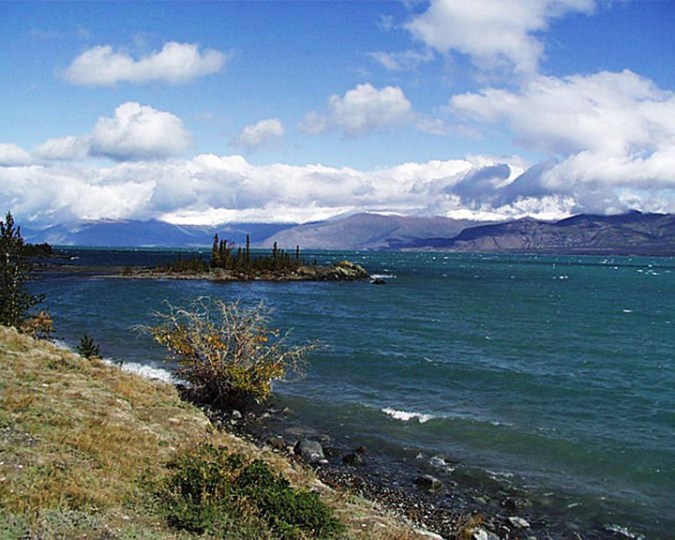
Crossing back into Canada I will continue then south along Canadian Highway 1 to visit Destruction Bay and Kluane National Park and Reserve.

kluane-PIC00016-edited

Kluane Lake from Google

Not much further I will turn at Haines Junction on Highway 3 toward the city of Haines, AK. I understand Haines Highway is a very scenic drive and is a perfect road to take on my way to the Alaska Marine Highway Ferry to Skagway, AK.


I have always enjoyed my time in Skagway with the cruises but have never stayed longer than 6-8 hours. I cannot wait to relax and explore the town after the cruise ships have departed. For 2 nights I will stay in this town to explore the many sites I have been rushed through or not been able to see.

Skagway-8

From this point of the adventure south I have not been lucky in finding many sites to visit. If anyone has driven these roads please let me know about interesting or scenic places along the route.

Skagway 2 Barkerville 2017-11-17 at 1.53.32 PM

After this short respite I will head north up the Klondike Highway back into Canada and again turn east around Carcroos onto Highway 8 to Highway 1 then south on Highway 97. Visiting Salmon Glacier – Granduc Mine then turning off onto Highway 26, I will visit the living history museum of Barkerville.

Barkerville

Barkerville from Google

“Today, the extraordinary town of Barkerville (named in Billy’s honour) still stands as testament to BC’s golden beginnings. With a unique streetscape of 125+ heritage buildings, authentic displays, satellite museums, restaurants, shops and accommodations there is still so much to explore. Declared a National Historic Site of Canada in 1924 and a Provincial Heritage Property in 1958, Barkerville is now the largest living-history museum in western North America, where exciting seasonal events and fun-filled daily activities await.” from Barkerville Historic Town website.

Returning back to Highway 97 I will visit some of the Provincial Park’s scattered along this Highway and then turn toward Kamloops, British Columbia to explore Highway 5A, I hear it is one of the areas scenic motorcycle roads.

I will enter back into the United States at Abbotsford and head down Interstate 5 to Vancouver, WA for another stop to visit my son and family before heading back south to Southern California along the Washington, Oregon and California coast, Highway 101.

2 Home 2017-11-17 at 1.53.58 PM

There you have it a 45 day long adventure that I am looking forward to.

2017-10-31 OverallMap

Canada PLANNING PART 2 – Onward to Jasper and Dawson, Yukon, Canada

Lets go on an Adventure

ADVENTURE – An exciting, daring, bold, risky or very unusual experience or undertaking fraught with physical, financial or psychological risks.

Any ideas of what to visit in the areas I am traveling would be appreciated, not all sites are noted somewhere, secret spots abound. And if you share these secret spots with me to enjoy I will not post where they are but will relish in the beauty around me and be grateful you trust me with this shared this information.

Continue reading

The Canada adventure is in planning

ADVENTURE – An exciting, daring, bold, risky or very unusual experience or undertaking fraught with physical, financial or psychological risks.

Lets go on an Adventure

What does this mean? It can be different for everyone; skydiving, mountain climbing, scuba diving, river rafting, caving (spelunking) traveling, exploring…… anything that is outside the ordinary for that individual is an adventure. Many make their adventures a way of life and never stop. For some it is just a day, weekend or short trip. Does it need to involve speed, height, a high level of physical exertion or highly specialized gear, some would say yes. I do not think that at all, it is up to the individual the extent of the adventure to be accomplished.

Next August my ADVENTURE will involve a 45 drive from Southern California to Dawson, Yukon Territories in Canada, up the Dawson highway to the Arctic Ocean and back in my 2017 Subaru Outback. It is something I have never done and it has always been on my bucket list. I have taken 2 cruises to Alaska and have loved the experiences. I now want to experience the lands of Canada and Alaska from the ground driving through the countryside.

2017-10-31 OverallMap

·      Will it be scary? …..Probably as I will be doing it alone.

·      Will it be exhilarating? …..Yes.

·      Will it be fun and exciting? …..Definitely.

·      Am I excited to plan and start this adventure? …..OH YES.

The trip will leave Southern California and head up east side of the Sierra Nevada Mountains then I will cut over to Vancouver, WA to visit my son and his family for a few days.

2017-10-31 CA2Van

The Adventure really begins after this visit as I head to Glacier National Park, Montana; Waterton Lakes National Park in Canada. Continuing north to Banff and Jasper National Parks, Alberta, Canada. Then going north into the Yukon Territory, the smallest and least populated province in Canada to the small town of Dawson. From Dawson I will head up the Dawson Highway to Inuvik, Northwest Territories, Canada and then continue the final 130 km on the new all season road to Tukoyakuk, Northwest Territories, Canada. Returning to Dawson I will then head east to Chicken, Alaska turning south for Haines to cross on the ferry to Skagway, Alaska. It will then be time to head south after a few days rest in Skagway. Stopping again in Vancouver, WA I will hopefully finish with a camping trip in the Sierras with a group of Overland Bound friends to end this adventure. That is the rough itinerary at this time.

·      Adventure? …..I think so.

·      Something out of my ordinary routine? …..DEFINITELY for me.

So what does this involve? A lot of investigation on the Internet, reviewing maps and with the help from individuals who kindly share their knowledge of the areas I am visiting. I will be camping along the way when possible and staying at motels, hotels or lodges as needed. Road conditions, places to stay, services (food and gas), places to visit all need to be investigated.

·      Will schedules change?

·      Will additional sites present themselves?

·      Will destinations be revised?

All a YES to me, it is still being planned so anything is all possible.

My vehicle is still getting prepared for the adventure with items to makes it’s life and mine more enjoyable. Better suspension, all-terrain tires, roof rack, navigation equipment, full size spare tire, tow strap, tools, tire gauge, tire repair (plug) kit, gloves, fire extinguisher, shovel, axe, extra gas can, repair parts, extra power outlets added for charging all the electronic gear that we all carry now, tint for the rear windows, communications, boost jump starter battery charger and jumper cables, and a portable air compressor for a start.

w: Springs 1

My clothing and toiletries will be my normal travel items (see previous post) modified for the weather. I will possibly be adding a Go Pro video camera to my photographic equipment for additional documentation of the adventure.

Then I must go through the camping gear to pare down to the basics on what I really need to take along. It will include tent, tent ground cloth (footprint), sleeping bag and pad, stove, pots, fry pan, plates, cooking and eating utensils, dishpan, dish soap (Dawn), camp chair and table, tarp, mosquito repellant and head netting, camp lights and batteries, propane, lighter and matches, trash bags, cleaning bucket, 5 gallon drinking water container, a cooler and food storage containers.

Additional gear will include a hand held GPS, first aid kit, whistle, cordage (para-cord), knife, bear spray, maps, compass and possibly a small backpacking hammock.

Now what am I visiting along the way.

Part 1

The real start of my trip will be when I leave Vancouver, WA for Glacier National Park in Montana where I will be overnighting at the Apgar, Sprague Creek or Fish Creek Campgrounds depending on availability in the south end of the park.


From there I will head over “Going to the Sun Highway” to see the sights and stop as needed for the night.

2017-10-31 Glacier

The next day I will enter Canada and stop for a few days to explore the area of and around Waterton Lakes National Park.

After Waterton, I will head to Banff to stay for about 5-6 days in a condo (timeshare exchange) to explore the surrounding area. Along the way to Banff I will stop at the Bar U Ranch National Historic Site to look around.

2017-10-31 Glacier2Jasper

The fist day I will wander around the town of Banff getting current information at the Visitor Center and the Banff Park Museum, visit the Whyte Art Museum of the Canadian Rockies, the Natural History Museum and the Buffalo Nations Museum. Just outside of town I will visit Cave and Basin National Historic Site and the Upper Hot Springs.

In my remaining days in Banff I will explore up Highways 1 and 1A as far as Lake Louise visiting locations and scenic overlooks such as Backswamp, Muleshoe, Sawback, Hillsdale Meadows, Johnson Canyon, Moose Meadows, Silver City, Rock Lake, Castle Cliffs, Storm Mountain, Castle Lookout, Protection Mountain, Baer Creek, Outlet Creek, Corral Creek, Lake Louise and Moraine Lake. Returning at the end of the each days adventure to sleep in a nice bed with kitchen area. If the condo idea falls through I will just head north along those highways stopping at campgrounds along the way to Jasper, Alberta, Canada.

2017-10-31 Banff2LL

Now, how have I found this information? From maps; computer mapping programs; books, searching the specific areas I wish to visit on the Internet (Google is my friend); country, territory and city visitor information sites; and information from other travel bloggers. I have gone to my local bookstore to wander and peruse the shelves looking for interesting travel books of these areas. I will go to my local Automobile Association to find out what information they might have available there. A travel book, map and your time searching are well spent in preparing for a trip. Information gained ahead of the trip will help insure you plan the time to see the sites most important to you.

I will continue with the planning of this adventure in additional posts so please stay tuned.

Any ideas of what to visit in the areas I am traveling would be appreciated, not all sites are noted somewhere, secret spots abound. And if you share these secret spots with me to enjoy I will not post where they are but will relish in the beauty around me and be grateful you trust me with this information.

Grand Teton and Yellowstone National Parks trip, August 2017 Days 6 & 7

The Beartooth Highway is said to be one of the most scenic drives in the United States. Featuring breathtaking views of the Absaroka and Beartooth Mountains, high alpine plateaus, glacial lakes, forested valleys, waterfalls and wildlife.

Abutting Yellowstone National Park it sits in a 1,000,000 acre (404,686 hc) wilderness. Being one of the highest and most rugged areas in the lower 48 states, it contains 20 peaks reaching over 12,000 feet (3,657 m) in elevation. Surrounding mountain glaciers are found on the north-facing slope of nearly every mountain peak over 11,500 feet (3,505 m) high. The Road itself is the highest elevation highway in Wyoming and the Northern Rockies at (10,947 feet; 3,336 m) and in Montana at (10,350 feet; 3,154 m).

Breathtakingly beautiful this drive takes your breath away with the vistas and the driving along the curving mountainous roads. This road is not for the faint of heart as the steepness at the edges can be overwhelming for people who do not like heights. This is a road for driving, exploring and for taking your time to see all the sights and paths along the way.

Continue reading

Grand Teton and Yellowstone National Parks trip August 2017 Day 4 part 1

Here are some excerpts from people who explored the region now known as Yellowstone. Which do you find realistic? Which do you find fantastical?

“At length we came to a boiling Lake about 300 foot in diameter forming nearly a complete circle as we approached on the South side. The steam which arose from it was of three distinct Colors from the west side for one third of the diameter it was white, in the middle it was pale red, and the remaining third on the east light sky blue. Whether it was something peculiar in the state of the atmosphere the day being cloudy or whether it was some Chemical properties contained in the water, which produced this phenomenon. I am unable to say and shall leave the explanation to some scientific tourist who may have the Curiosity to visit this place at some future period—The water was of deep indigo blue boiling like an immense cauldron running over the white rock which had formed [round] the edges to the height of 4 or 5 feet from the surface of the earth sloping gradually for 60 or 70 feet. What a field of speculation this presents for chemist and geologist.”—Osborne Russell, 1839

“One geyser, a soda spring, was so effervescent that I believe the syrup to be the only thing lacking to make it equal a giant ice cream soda of the kind now popular at a drugstore. We tried some experiments with our first discovery by packing it down with armfuls of grass; then we placed a flat stone on top of that, on which four of us, joining hands, stood in a vain attempt to hold it down. In spite of our efforts to curb Nature’s most potent force, when the moment of necessity came, Old Steam Boat would literally rise to the occasion and throw us all high into the air, like so many feathers.”—William Clark Kennerly, 1843

This day it would be just my son and I exploring Yellowstone, as the rest of the group have scheduled a boat at a local lake.

Yellowstone Day 4a-3Leaving at 7:30AM we head for the upper (northern) loop in the park as we first want to visit the Mammoth Hot Springs area, then work our way back south. Passing Norris Geyser Basin for later in the day or tomorrow we continue clockwise on the east side of the loop. We soon encounter a major road construction project going on. There must have been at least 8 plus miles (13 km) of broken pavement and dirt one-lane road to travel before we are back on the 2-lane asphalted roadway.

Continue reading

Grand Teton and Yellowstone National Parks trip August 2017 Day 3 part 2

Did you know Yellowstone was home to the army, stagecoach robbers, a president, and the largest free roaming herd of bison?

1800s Accounts From Out West
For decades, fur trappers and mountain men told stories of the lands out west. To folks living back east, all of the accounts must have seemed fantastical, yet today we know that some of the accounts were quite accurate (and some embellished works of fiction). How do you go about determining the truth of a story?

Here are some excerpts from people who explored the region now known as Yellowstone. Which do you find realistic? Which do you find fantastical?

“From the surface of a rocky plain or table, burst forth columns of water of various dimensions, projected high in the air, accompanied by loud explosions, and sulphurous vapors, which were highly disagreeable to the smell.”—Warren Angus Ferris, 1833

“Here we found a few Snake Indians comprising 6 men 7 women and 8 or 10 children who were the only Inhabitants of this lonely and secluded spot. They were all neatly clothed in dressed deer and Sheep skins of the best quality and seemed to be perfectly contented and happy.”—Osborne Russell, 1835

Intreged by stories coming from explorers and of two earlier expeditions, the US Geological Survey funded the first government-sponsored mission to the area in order to document the geological wonders and beauty it had to offer. They undertook this with the US Army Corps of Engineers.

The history of the science in Yellowstone began with this expedition. Dr. Ferdinand V. Hayden’s 1871 team included two botanists, a meteorologist, a zoologist, an ornithologist, a mineralogist, a topographer, an agricultural statistician/entomologist, artists, photographers, and support staff. The group of 35 men set out in July 1871 to bring back scientific evidence of earlier tales of thermal activity.

Continue reading