2016 a year in review.

Well 2016 I am not sorry to see you go, it has been a year of ups but with more downs for me. Looking forward to 2017 and what is ahead.The year started off as good as any of the last few years with travel plans and family visits and was looking to be a pretty good year shaping up.

Starting off, a wonderful trip to Walt Disney World for 9 full days with 8 split between the 4 parks and a rest day. It was wonderful but tiring for us. Jodi was a trooper as usual, she walked as much as possible for a couple of hours then she had to use the wheelchair for the rest of the day.

Back from the trip Jodi was tired but pushing along pretty well. A clinic visit went well in mid-March but then she had an incident and died on the 31st of March. This completely shattered me, she had a spark of life that I cold not explain. It just radiated from her.

Then I was able to get to 2 local events a Concourse Car Show and the Taste of Huntington Beach, both in HB Central Park, these two afternoons were just an amazing time out of the house.

Next up on the agenda was to get up north to see my grandson’s 1st birthday at the end of April. It was a wonderful time but sad for all of us adults at the same time.

Then a cruise to Alaska that was planned in 2015 with family and extended family in June. WIth 9 of us it was an exciting time and a very lovely trip.

Then in October it was another trip up north to visit my grandson with an overnight stop in the Redwoods for the night.

My daughter and the 2 grand kids moved back into the house the first  week of November to fill up the 4 bedroom house. Now it is a lively house again with non-stop activity.

Finally the holidays, Thanksgiving and Christmas have been happy but hollow with something very important missing in our lives.

So looking forward to planning new adventures for 2017, enjoying travel again and seeing new places. My Bucket List is long and constantly growing so we will see if I can visit these places in the time left.

Planning and preparing for the 2018 Alaska adventure will take a lot of 2017 and really be exciting.

Possible Alaska Journey

I hope everyone has a wonderful 2017 and your adventures all come true.

May the calm be widespread, may the sea be as the smooth surface of the greenstone, and may the rays of sunshine forever dance along your path” Maori Prayer.


Alaska Adventure

Here is a massive trip I hope to take in 2018. With health issues right now I do not think this will happen in 2017 like was planned, but you never know. I still have a lot of planning to go into this adventure. It will be at least 45 days long. Heading north on the eastern side of the Sierra Nevada mountains I will be vIsiting Lassen National Park, Crater Lake National Park, Glacier National Park, Banff National Park, Jasper National Park, Dawson, possibly Prudhoe Bay?, Haines, Glacier Bay National Park, and Skagway, Then south to Whistler, the Cascades, Mt Rainier, and Mt St Helens. With the final leg of the journey back along the pacific coast to So Cal.

I know very ambitious but it is something I truly want to do. Any comments or recommendations?

Possible Alaska Journey

From a trip to the California Redwoods, full post coming soon. Happy Halloween everyone.

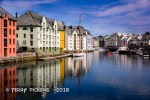
The Art Nouveau town of Alesund, Norway


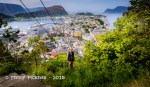
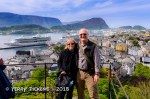
View of Alesund from Fjellstua

Alesund from Fjellstua

This morning we dock in Alesund, Norway a municipality founded in 1838 consisting of a population of 45,033 surronded by fjords and the high peaks of the Sunnmor Alps. Alesund is the most important fishing harbor in Norway and was destroyed by fire in 1904, luckily only 1 person was killed but 10,000 were left homeless. The buildings of the town center were rebuilt in the Art Nouveau Style between 1904 and 1908. We plan to use the 10 stop Hop-on-Hop-Off bus that circles the town which gives us 24-hour transport with commentary.

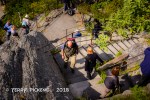
418 steps that is a lot of steps

Alesund from Fjellstua

Upon reaching the mountain top stop at Fjellstua we get off the bus to view the town below us and appraise the menu of the restaurant that serves basic local dishes. Still full from breakfast we skip buying anything and just enjoy the view. It is decided we shall tackle the steep 418 steps back down to the town ending in Parken Kolturhus. Thank goodness we did not come up them, it is very steep and the steps are all at differing heights (from ankle to knee height).

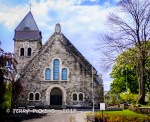
Reaching sea level again we jump back on the Hop on Hop off bus at the Rica Parken Hotel and get off at the Art Nouveau City Center to walk around town enjoying the architecture and end at the Alesund Kirke (Church). The church was closed but it was a magnificent marble clad building, I can only imagine how nice it was inside.


The ship is leaving Alesund in the late afternoon so we will get a lot of scenic vistas as we wind our way through the numerous fjords on our way to tomorrows stop at the small town of Geiranger, Norway.

Flam, Norway Railraod

We leave  Copenhagen, Denmark on a cruise ship so we can see the Norwegian fjords in our vacation time frame. First port was Flam, Norway.

We scheduled an excursion on the Flam Railway to see the sights of the scenic Norway countryside.

The Flåm Railway has been named one of the most beautiful train journeys in the world. The train runs 12.6 miles (20.2 kilometers) from the end of Aurlandsfjord, a tributary of the Sognefjord, up to the high mountains to Myrdal Station. Along the journey are some beautifully stunning scenery of Norway.

In about an hour you go from sea level in Flåm to the Myrdal mountain station at 2,844 feet (867 metres) above sea level. In Myrdal you can connect to trains running between Bergen and Oslo.

The Flåm Railway is one of the steepest standard-gauge railway lines in the world, with 80% of the journey at a gradient of 5.5%. Along the trains route you see small villages and hamlets, beautiful mountainsides, foaming waterfalls and pass through 20 tunnels. It’s longest tunnel is the 4,401 foot (1,341.5-meter) long Nåli Tunnel.

The first engineering surveys for the Flåm Line were performed in 1893 with the plans approved by Parliament in 1916.  Construction started in 1924, with track laying starting in 1936 and the rail line finally opening for service in 1940. Of the 20 tunnels along the route only 2 used machines for digging, the rest were dug by hand.


Train at Flam RR Museeum

Train at Flam RR Museum

After the trip  we stop at the Flam Railway Museum to learn more of the history of the Flam Rail Line and how this rail line was constructed. The models, photos, illustrations, actual equipment and older train engines was a great way to understand how this rail line was built and used, the engineering and the hard labor that went into constructing this rail line.

After the museum it is time for walk around town, visit the tourist information center and a tourist souvenir shop next door with interesting nic-nacs. After our walk among the shelves, and a few laughs at some of the items for sale, we must stop at the local grocery store to pick up a few items to enjoy for snacking as they are not available on the ship. As it is getting close to the time for the ship to depart we head back to get ready for dinner with the 5 other couples at our assigned table.

Sitting down to dinner we all relate our days adventures and thoughts on Flam while enjoying the wonderful food and the scenery floating by outside the large windows of the Dining Room. We enjoyed the small town feel, the scenery on the Rail Journey and walking around town. This would be a town to stay in to enjoy for a couple of relaxing days exploring the local area with a vehicle or just hiking. Our table is one of the last to finish as we all are enjoying the company and conversation. I think we would all stay longer but there is another dinner service they must get ready for. As the others leave for their nightly adventures, it’s back up to Deck 10 for the evening walk enjoying the scenery as we sail away from Flam to our next destination Alesund, Norway.

Vigeland Museum and Frogner Park

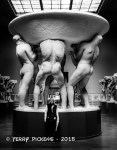
Vigeland Museum-8After we finish exploring Akershus Fortress we take the T-Bane over to the Vigeland Museum. This museum was the workplace and home to Gustav Vigeland, a Norwegian artist who negotiated free rent on this space for the future rights to his work with the government. This building houses his sculptures, woodcarvings, models, drawings, sketches and photographs of the artist through his years of work. His interesting sculptures are very modern and surreal which made for an interesting and thought provoking visit.

Vigeland was born in 1869 to a family of craftsmen and also designed the Nobel Peace Prize Medal. Vigeland moved to his new studio in Frogner Borough during 1924. His studio was located in the vicinity of Frogner Park, which he had chosen as the definitive location for his fountain. Over the following twenty years, Vigeland was devoted to the project of an open exhibition of his works, which later turned into the Vigeland Sculpture Arrangement in Frogner Park.  

Looking to the the Main Gate from the Plateau at Frogner Park

Looking to the the Main Gate from the Plateau

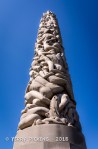
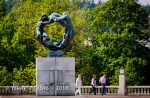
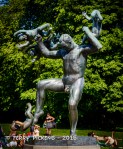
Right across the street from the museum is Frogner Park with the Vigeland Outdoor Sculpture Area.  We first stop at a corner 7-11 and pickup hot dogs, chips and drinks for a lunch in the park as not much else was open during the holiday. We join the thousands of other people enjoying the sunny holiday in the park while eating our picnic lunch. Frogner Park is the largest park in Oslo occupying a former manor house grounds of 80 acres. The park includes the Manor House and Vigeland Sculptural Exhibition area which houses 212 of his bronze and granite sculptures. There is no way we would be able to walk the entire park so we concentrate on the area between the museum, the Monolith Plateau, the Fountain and the Bridge which showcases Vigeland’s sculptures. What an enjoyable time exploring these sculptures and the park grounds. We cross the bridge, head to the T-Bane stop at the Main Gate on Kirkeveien and head back to our apartment after a glorious afternoon of walking.  This was the most crowded we saw the T-Bane during our time here and we had to wait for 2 trolleys before we were able board. Everyone was outside enjoying the weather and visiting with family and friends.

Such a wonderful day, Vigeland sculptures belong in a park. They are larger than life and make your mind explore the meaning behind them. A park for an afternoon stroll and picnic lunch in the beautiful sunshine.

Kon Tiki Museum

Next door to the Fram Museum was the Kon Tiki Museum honoring Thor Hyerdahl’s adventures aboard the Kon Tiki and Ra II.

The Kon Tiki, a balsa wood pre-Columbian ship design that sailed in 1947 from Peru to Polynesia is a 30 foot by 15 foot raft of nine balsa wood logs designed and built to prove that sea travel could have been possible by the South American population and they could have populated the South Pacific. After covering 4,300 nautical miles in 101 days, an average speed of 42.5 miles per day they reached Polynesia. 

The Ra II was built of reeds based on ancient Egyptian design and sailed from North Africa to the Caribbean. On May 17, 1970, Norwegian Thor Heyerdahl and crew set out from Morocco across the Atlantic Ocean, Heyerdahl thought that Mediterranean civilizations sailed to the America’s and exchanged cultures with the people of Central and South America. The crossing of 4,000 miles of ocean to Barbados took 57 days.    

What interesting people the Norwegians are, they love the outdoors, travel and exploration. When I hear my distant relatives probably have Viking blood it is no wonder my family loves to explore and travel to see new and interesting destinations.


Fram Museum; Oslo, Norway. A Tale of a Norwegian Polar Expedition

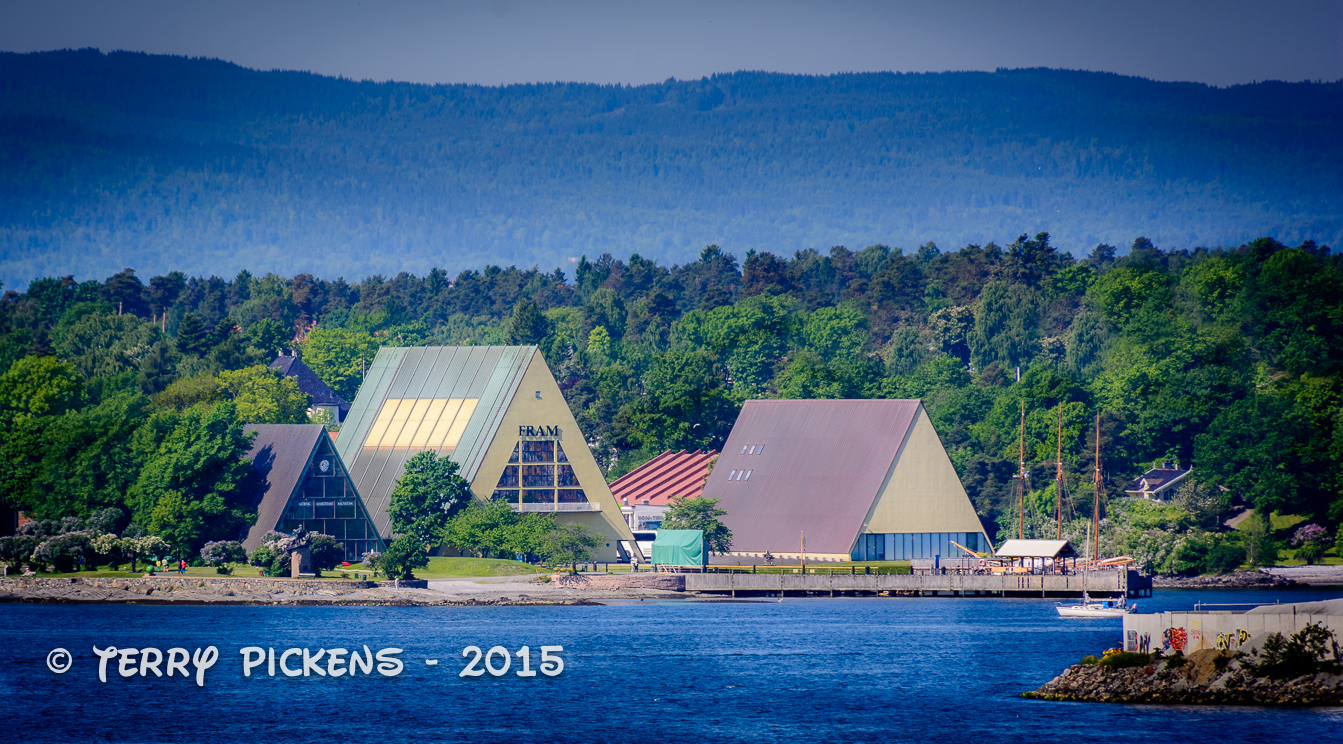
Leaving the apartment early we jump on the T-Bane for the harbor to catch the ferry to Bygdoy for our Norwegian maritime history lesson for the day.  After a delightful ride we exit the ferry right at our destination, 3 separate Norwegian Maritime Museums.

Maritime Museums from the water

Maritime Museums from the water

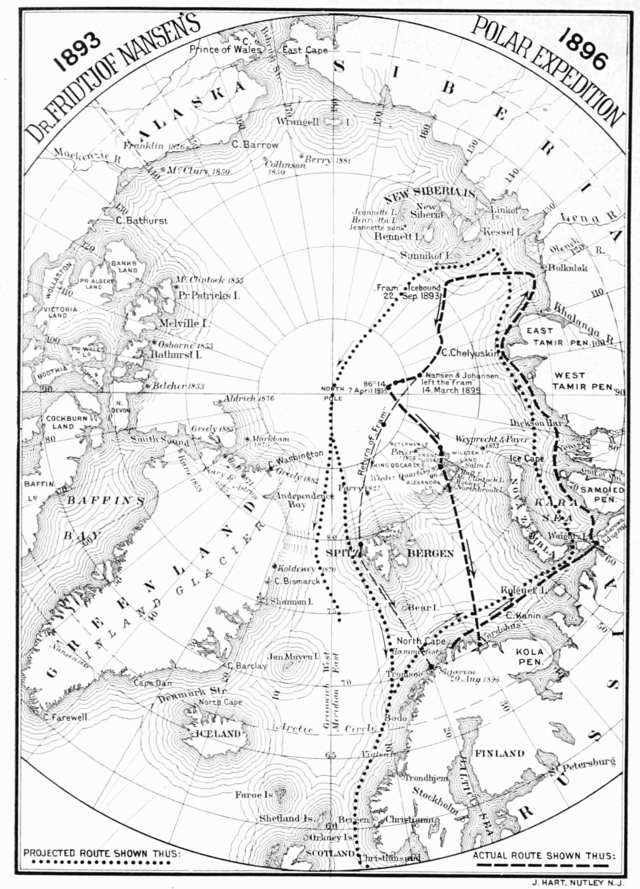
Fram Arctic Expedition Map

Fram Expedition Map

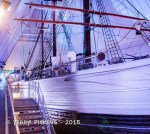
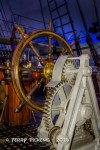
First up is the Fram Museum, which tells the story of a Norwegian Polar Expedition taken between 1893 and 1896. The ship, the Fram, was commissioned by explorer Fridtjf Nansen and built in 1891 by Colin Archer to reach the north pole by using the shifting ice flows. The museum was built in 1936 to house the ship and explain the 5-year polar exploration of the 12 brave men. The 36’x128’ double ended ship was built with a shallow draft, a 24”-28” thick hull, 3 masts, and a rounded hull to ride up on the ice flow. It was also supplied with a wind generator to supply electricity to power the experiments and men’s needs. It was amazing these men survived the trip frozen in the ice flow for so long with no means of resupply. The map attached shows the extent of their voyage.

The expedition never reached the pole due to the shifting ice current and Nansen and Hjalmar Johansen decided to head out by dog sledges to reach the pole. That proved unsuccessful due to the ice flows and the 2 made their way south to Franz Josef Land where they made camp for the winter.
The Fram meanwhile continued west then made a southerly course swing on the ice flow to emerge into open waters and make it’s way back to Oslo. Nansen and Johansen were picked up by a British explorer who took them back to civilization at the same time the Fram emerged from the ice.

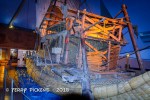
It was very interesting to walk the decks, inside and outside, and see how these men lived and survived during that voyage. These were brave men who risked their lives for adventure and discovery with no means of support, communication or rescue. The exploration was not a failure as the crew brought back a lot of information previously not known. Here are some photos of the ship and museum.  


Norsk Folkemueum; Oslo, Norway

After our 2-3 hour exploration of the Viking Ships we board the bus for the short trip to the Norsk Folkemueum (link) just down the road.

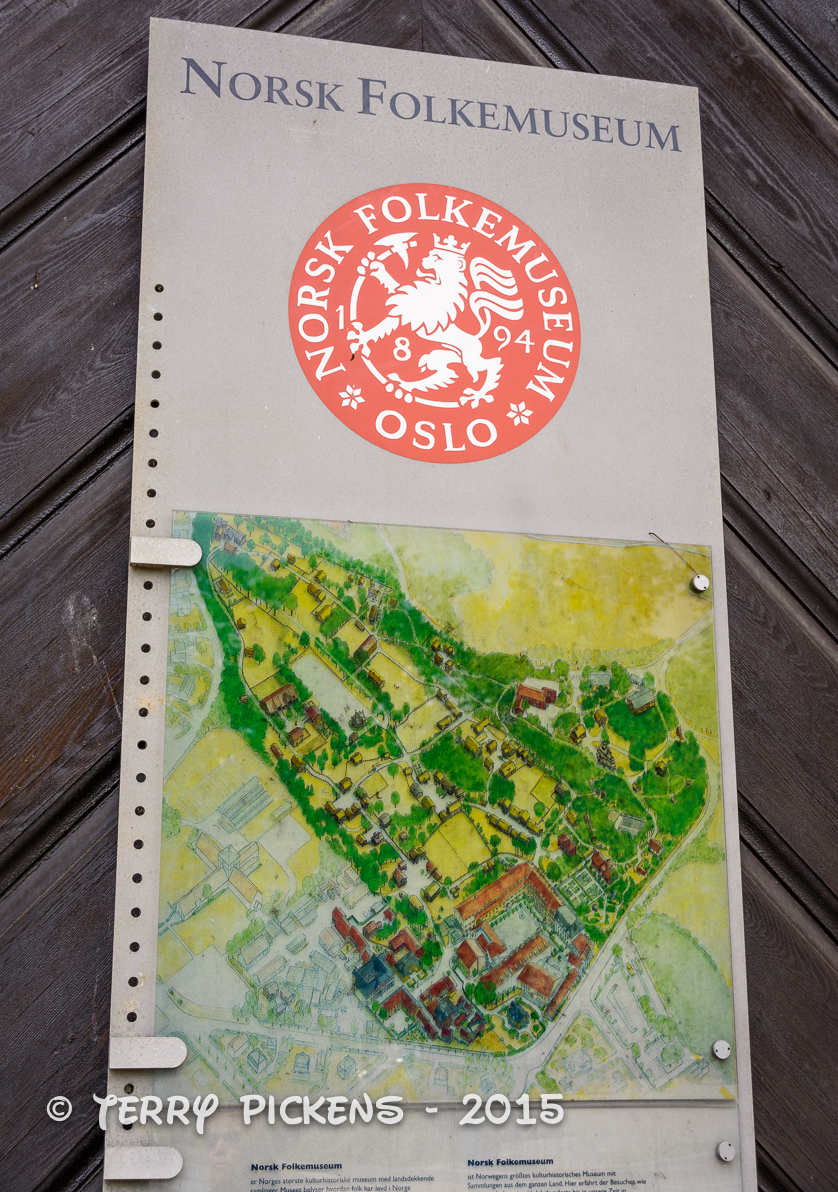
Norsk Folkemuseum Map

Norsk Folkemuseum Map

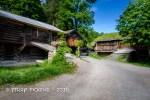
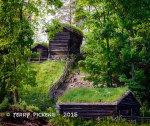
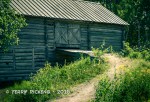
Arriving at the museum we gain access using the Oslo Pass (link) again without an admission fee. Founded in 1894 the Outdoor museum is Norway’s largest Cultural History museum that includes 160 buildings from around the country and 230,000 artifacts from the 1500’s to the present. The grounds include architecture and artifacts from towns, country farms and estates and all social classes. It is interesting to see the folk art, costumes, toys, exhibits, artifacts and life from the areas these buildings were brought from. They have costumed actors in some of the buildings providing insights into the daily life and crafts during the time period of that building, the actors are so happy to discuss how life was during that time period with any guest entering. The Stave Church is one of 5 medieval buildings from the 1200’s and is very impressive both inside and out. It was deconstructed and moved to the museum when the congregation needed a larger church. Our bodies need refueling so we stop in for a very good quick lunch of sandwiches, desert and drinks in the museum café and head back out to continue our exploration of the grounds. (Text continues below gallery)

After a full day of walking at 5 PM we jump back on the bus, transfer to the T-Bane and arrive at our apartment for dinner and then off to the store to pick a few snacks for tomorrows adventures.

During all the vacations Jodi (a graphic artist) and I (architect) take you will notice a pattern, we love history, art, architecture and the culture of the country we visit. Both our families have members that have immigrated to the USA from Europe since the early 1600’s and we have visited places that just feel comfortable to us, only later to find out that our forefathers came from that area 100’s or 1,000’s of years ago.

Going to museums, art galleries, walking the streets and alleys of a destination, eating where locals dine and talking with people are the best ways to understand the similarities and differences of our countries. Never ask where to go to eat always ask where they would go to eat. It is pleasant to learn by seeing and actively participating in the ways of other cultures. We have met very wonderful and colorful individuals in our travels and would not change the way we travel for anything. We have discussed governments with the owner of a Laundromat outside of Amsterdam while we did laundry, and discussed local sites to visit during breakfast with the family of a B&B in Southern France, during all these encounters we have had wonderful conversations with so many people. Getting on the ground, staying and eating with locals rather than other tourists is amazing (better and inexpensive). Going to a café or restaurant and not being able to read a menu can bring unexpected delights, very seldom not so much, but that is the adventure. We have never been treated with disrespect and it seems a majority are willing to do their best to converse and help us with our travels.

Vikingskipshuset (Viking Ship Museum) Oslo, Norway

We are staying in the Schous Plass area of Oslo and head to the Schous Plass T-Bane stop to catch the trolley to the downtown area where we’ll need a transfer to a bus to Bygdoy for our visit to the Vikingskipshuset and the Norsk Folkemuseum, our adventures for today’s Norwegian history lesson. Continue reading