New Years trip to Washington – Part 2

Up at 7AM in the dark, I showered, packed and departed to visit some painted ladies of the town. No not that kind, but the beautiful Victorian Houses located throughout the city of Eureka. My Air BnB host told me of Hillsdale Street and Carson Mansion as places to see fine examples of this Victorian, Queen Anne style of architecture.

These wonderful homes are located throughout the city in various stages of maintenance that go from restored to dilapidated conditions, along Hillsdale Street they are well maintained and are a great display of this style of architecture. Visiting Hillsdale Street lined with these homes brought back such a noustalgic past life that would have transported me back in time if it weren’t for all the modern cars parked out front.


Next stop was to have a breakfast consisting of 2 blueberry pancakes, 2 eggs, 2 pieces of bacon, hash browns and a large glass of orange juice to fuel my day of sightseeing along the California and Oregon Coast, yes I was hungry and finished it all. I planned to visit several scenic overlooks and lighthouses along the way to my next stop just north of Coos Bay, OR only 218 miles (350.8k) and 4 ½ hours of drive time north.

My first stop was still in Eureka, just down the street from breakfast, the Carson Mansion. Placed on the Historic American Building Survey in 1964 it is one of the most photographed Victorian homes in California. Completed in 1884 it has been a private club since the 1950’s.


My next stops, lighthouses in Trinidad, CA and Crescent City, CA were also recommended by Patricia, my B&B host.

Prior to satellite and electronic navigation sailors relied on dead reckoning, compass and visual sittings to sail the waters of the oceans, during the darkness of night they relied on the stars and visual sightings. Many ships were lost due to running aground due to heavy weather along dangerous coastlines.

Fires built on hilltops once defined port access and placing that fire on a tall platform increased its visibility out to sea. Later lighthouses were located along coastlines to help define the coastal shoreline and locate dangerous areas that could sink a ship. In heavy fog, that is quite common along coastlines, so a light and foghorns (bells in olden times) warned mariners of hazards.


Trinidad Lighthouse is only 20 miles from Eureka located on Trinidad Head a small section of land jutting south out from the coast defining the harbor entrance. Built in 1871 the small 20-foot (6.1m) tall tower sits on a promontory 176 feet (53.6m) above the sea. Originally consisting of the light tower, a single residence, and small barn; a fog bell house was constructed in 1898 with a 4,000-pound (1,800 kg) bell that was operated by weights. The Trinidad Civic Club erected a facsimile of the tower in 1949 at a park overlooking the harbor and installed the original lighthouse lens in its structure and the 4,000-pound bell displayed alongside the tower. This Memorial is now under protest by local Native Americans stating it has been built on an ancient burial ground.


62 miles (99.7k) north of Trinidad is the Lighthouse in Crescent City on Battery Point. This lighthouse built in 1855 is on a tiny point of land that is only accessible during low tide. Built in a Cape Cod style of architecture this lighthouse survived the March 27, 1964 Alaska earthquake tsunami that hit the city and killed 11 people.


Heading into Oregon I stop 35 miles (56.3k) north at Whaleshead Beach to walk along the sand and enjoy the coastal scene.

2 to Coos Bay-18

Whalesehead Beach, OR

Another 58 miles (93.2k) later I stopped at Cape Blanco Lighthouse at 3 PM. A lighthouse sitting on 200-foot (61m) high cliffs jutting 1-½ miles (2.4k) out into the Pacific Ocean, this forested head of land had to be cleared of the spruce forest so the light could be visible from sea. Getting out of the car was a struggle; the wind was blowing so hard I could barely stand up. Walking the ¾ mile or so path to the lighthouse along a ridge-line didn’t interest me today so I leaned against a pole just to get a steady photo of the lighthouse. I’ll return on a future trip to visit this one.


On the way in off Highway 101 I noticed a sign leading to the Hugh’s Historic House (Hughes Ranch) that is listed on the National Register of Historic Places, I decided to go in and see it, as I didn’t make the journey to the lighthouse. Situated behind a hill it was in the calm leeward side away form the strong ocean winds. Built in 1898 for the dairy farm of Patrick and Jane Hughes this Victorian style two-story house was home to Mother, Father and 7 children. Local church groups decorated every room for the Christmas Holidays. The well appointed home with authentic furnishings was a joy to walk around and listen to the curators tell of life of the inhabitants.


Finishing the day’s 218-mile (350.8k) trek in North Bend, OR I stop for the night at a Quality Inn Hotel at 5 PM to rest for my final push to Vancouver, WA the next day. A nice clean quiet typical motel room awaited me that evening for another great nights rest.

2017 in review quite a better year

2016 was just a total joke of a year and I was glad it was over, 2017 has been much better and full of adventures.

January started off recuperating from an sudden illness that happened in mid-December and during this time I started planning a trip up to Vancouver, WA the end of February to visit family and purchase my new adventure vehicle, a 2017 Subaru Outback.

Continue reading

A short trip exploring desert mines

Location

As a trip I have taken on my motorcycle before I wished to explore the El Paso Mountain area at a slower pace and take my larger camera with me. This happened a few weeks ago and I had such a fun time exploring I will return again as there are so many additional sights that I could not visit in one day.


The trails took me from Red Rock Canyon State Park through the El Paso Mountains finally exiting close to the old gold mining town of Garlock. This west to east trail can be traveled in either direction and has many side trails leading to other areas.

Continue reading

PLANNING PART 3 – Leaving Dawson for Skagway, AK and home

Lets go on an Adventure

ADVENTURE – An exciting, daring, bold, risky or very unusual experience or undertaking fraught with physical, financial or psychological risks.

Any ideas of what to visit in the areas I am traveling would be appreciated, not all sites are noted somewhere, secret spots abound. And if you share these secret spots with me to enjoy I will not post where they are but will relish in the beauty around me and be grateful you trust me with this shared this information.


Leaving Dawson I will ferry across the Yukon River, A major waterway in this area that is the 3rd longest river in the U.S. Heading west along Canadian Highway 9 to the border crossing into Alaska Crossing at a small border station I shall continue along Highway 5, The Taylor Highway, to pass Chicken, AK and finally end at the junction with Highway 2, The Alaskan Highway, to head southeast.

Dawson 2 Skagway 2017-11-17 at 1.52.06 PM

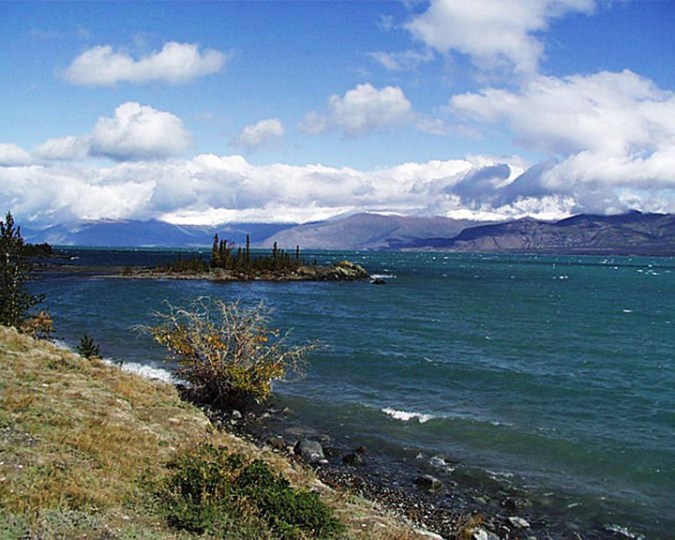
Crossing back into Canada I will continue then south along Canadian Highway 1 to visit Destruction Bay and Kluane National Park and Reserve.

kluane-PIC00016-edited

Kluane Lake from Google

Not much further I will turn at Haines Junction on Highway 3 toward the city of Haines, AK. I understand Haines Highway is a very scenic drive and is a perfect road to take on my way to the Alaska Marine Highway Ferry to Skagway, AK.


I have always enjoyed my time in Skagway with the cruises but have never stayed longer than 6-8 hours. I cannot wait to relax and explore the town after the cruise ships have departed. For 2 nights I will stay in this town to explore the many sites I have been rushed through or not been able to see.

Skagway-8

From this point of the adventure south I have not been lucky in finding many sites to visit. If anyone has driven these roads please let me know about interesting or scenic places along the route.

Skagway 2 Barkerville 2017-11-17 at 1.53.32 PM

After this short respite I will head north up the Klondike Highway back into Canada and again turn east around Carcroos onto Highway 8 to Highway 1 then south on Highway 97. Visiting Salmon Glacier – Granduc Mine then turning off onto Highway 26, I will visit the living history museum of Barkerville.

Barkerville

Barkerville from Google

“Today, the extraordinary town of Barkerville (named in Billy’s honour) still stands as testament to BC’s golden beginnings. With a unique streetscape of 125+ heritage buildings, authentic displays, satellite museums, restaurants, shops and accommodations there is still so much to explore. Declared a National Historic Site of Canada in 1924 and a Provincial Heritage Property in 1958, Barkerville is now the largest living-history museum in western North America, where exciting seasonal events and fun-filled daily activities await.” from Barkerville Historic Town website.

Returning back to Highway 97 I will visit some of the Provincial Park’s scattered along this Highway and then turn toward Kamloops, British Columbia to explore Highway 5A, I hear it is one of the areas scenic motorcycle roads.

I will enter back into the United States at Abbotsford and head down Interstate 5 to Vancouver, WA for another stop to visit my son and family before heading back south to Southern California along the Washington, Oregon and California coast, Highway 101.

2 Home 2017-11-17 at 1.53.58 PM

There you have it a 45 day long adventure that I am looking forward to.

2017-10-31 OverallMap

Canada PLANNING PART 2 – Onward to Jasper and Dawson, Yukon, Canada

Lets go on an Adventure

ADVENTURE – An exciting, daring, bold, risky or very unusual experience or undertaking fraught with physical, financial or psychological risks.

Any ideas of what to visit in the areas I am traveling would be appreciated, not all sites are noted somewhere, secret spots abound. And if you share these secret spots with me to enjoy I will not post where they are but will relish in the beauty around me and be grateful you trust me with this shared this information.

Continue reading

Grand Teton and Yellowstone National Parks trip August 2017 Day 4 part 2

A little history lesson

In the first 10 years of Yellowstone’s life as a National Park it was under serious threat from exploitation. Speculators built camps and hotels right next to the hot springs along with bath’s and laundries in the hot springs for the tourists. People took large pieces of geysers and artifacts from the grounds, while hunters poached animals.

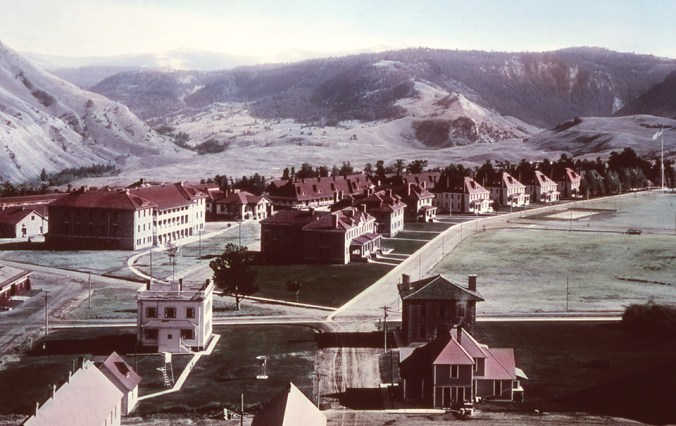
With no one to protect the resources Congress, in 1886, sent in the Army to protect these natural resources. For the first 5 years life was harsh in temporary Camp Sheridan. Soldiers lived in temporary wood framed buildings and tents through harsh winters. In 1890 Congress allocated money for a permanent post, Fort Yellowstone, to be built in the Mammoth Hot Springs area seeing no end in site for the Army’s deployment here. In 1910 there were 324 soldiers stationed here patrolling the park on horse back in summer and skis in the winter.

02988

Fort Yellowstone 1910

Continue reading

Grand Teton and Yellowstone National Parks trip August 2017 Day 4 part 1

Here are some excerpts from people who explored the region now known as Yellowstone. Which do you find realistic? Which do you find fantastical?

“At length we came to a boiling Lake about 300 foot in diameter forming nearly a complete circle as we approached on the South side. The steam which arose from it was of three distinct Colors from the west side for one third of the diameter it was white, in the middle it was pale red, and the remaining third on the east light sky blue. Whether it was something peculiar in the state of the atmosphere the day being cloudy or whether it was some Chemical properties contained in the water, which produced this phenomenon. I am unable to say and shall leave the explanation to some scientific tourist who may have the Curiosity to visit this place at some future period—The water was of deep indigo blue boiling like an immense cauldron running over the white rock which had formed [round] the edges to the height of 4 or 5 feet from the surface of the earth sloping gradually for 60 or 70 feet. What a field of speculation this presents for chemist and geologist.”—Osborne Russell, 1839

“One geyser, a soda spring, was so effervescent that I believe the syrup to be the only thing lacking to make it equal a giant ice cream soda of the kind now popular at a drugstore. We tried some experiments with our first discovery by packing it down with armfuls of grass; then we placed a flat stone on top of that, on which four of us, joining hands, stood in a vain attempt to hold it down. In spite of our efforts to curb Nature’s most potent force, when the moment of necessity came, Old Steam Boat would literally rise to the occasion and throw us all high into the air, like so many feathers.”—William Clark Kennerly, 1843

This day it would be just my son and I exploring Yellowstone, as the rest of the group have scheduled a boat at a local lake.

Yellowstone Day 4a-3Leaving at 7:30AM we head for the upper (northern) loop in the park as we first want to visit the Mammoth Hot Springs area, then work our way back south. Passing Norris Geyser Basin for later in the day or tomorrow we continue clockwise on the east side of the loop. We soon encounter a major road construction project going on. There must have been at least 8 plus miles (13 km) of broken pavement and dirt one-lane road to travel before we are back on the 2-lane asphalted roadway.

Continue reading

Grand Tetons and Yellowstone National Parks trip August of 2017 Day 3 (part 1)

I will be breaking this day into 2 posts as we covered a lot of ground during our all day adventure.

1800s Accounts From Out West
For decades, fur trappers and mountain men told stories of the lands out west. To folks living back east, all of the accounts must have seemed fantastical, yet today we know that some of the accounts were quite accurate (and some embellished works of fiction). How do you go about determining the truth of a story?

Here are some excerpts from people who explored the region now known as Yellowstone. Which do you find realistic? Which do you find fantastical?

“Boiling fountains having different degrees of temperature were very numerous; one or two were so very hot as to boil meat.”—Alexander Ross, 1818

“There is also a number of places where the pure suphor is sent forth in abundance one of our men Visited one of those wilst taking his recreation there at an instan the earth began a tremendious trembling and he with dificulty made his escape when an explosion took place resembling that of thunder.”—Daniel T. Potts, 1827

“The general face of the country was smooth and rolling, being a level plain, dotted with cone-shaped mounds. On the summits of these mounds were small craters from four to eight feet in diameter. Interspersed among these, on the level plain, were larger craters, some of them from four to six miles across. Out of these craters issued blue flames and molten brimstone.”—1868 account by Joseph L. Meek of his time in the region in 1829

Continue reading

Orange Empire Railraod Museum

A few weeks ago my grandson and I visited the Orange Empire Railway Museum (LINK) when the annual Steampunk fair was being held. This non-profit museum opened in 1956 to preserve Southern California’s railway history that dates from the 1870’s. With over 200 historic railway locomotives, passenger cars, freight cars, streetcars, interurban electric cars, buildings, and other artifacts from Los Angeles and the West, the 90-acre site in Perris, California is open to the public every day except Thanksgiving and Christmas (check site for current opening days, times and special events).

Continue reading

Chesters Fort and Hadrian’s Wall

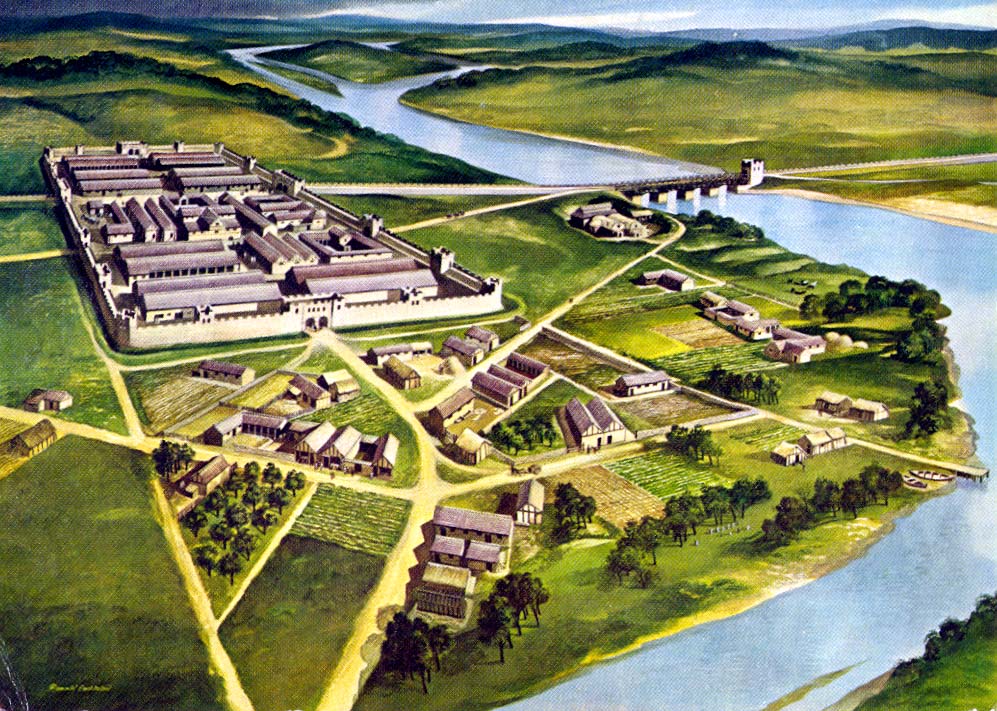
Chesters Fort Rendering from the south

After the morning wandering and exploring Beamish we drove approximately 30 miles to visit Chesters Fort (LINK) a part of Hadrian’s Wall (LINK). Driving along beautiful countryside we had to have the car disinfected for Foot and Mouth. Arriving at the fort we visited the museum to learn the history of the wall and fort, then walked through disinfecting mats for our short walk to the fort.

Continue reading